Panama Fishing Report: from rocky inshore sessions to explosive pelagic action.
This Panama Fishing Report for June 2024 was one of those weeks where the story builds in layers. We didn’t start with full-speed offshore chaos on day one—instead, we began by working the rocks, learning the water, and letting the trip find its rhythm. Then, from day three onward, everything changed. The pelagic activity turned on in a way that felt almost unreal: yellowfin sessions with strong numbers and solid average size, and a final push for wahoo after getting repeatedly “cut off” on surface bites earlier in the week.
Days 1–3: rock fishing to set the pace
The first part of the trip was focused on rock and inshore structure, exactly the kind of fishing that forces you to read the ocean properly. Panama can look “easy” from the outside, but the real results come from understanding current, pressure points, and where bait naturally gathers. These early days were about building consistency and ticking off key species while the group settled into tropical fishing life.
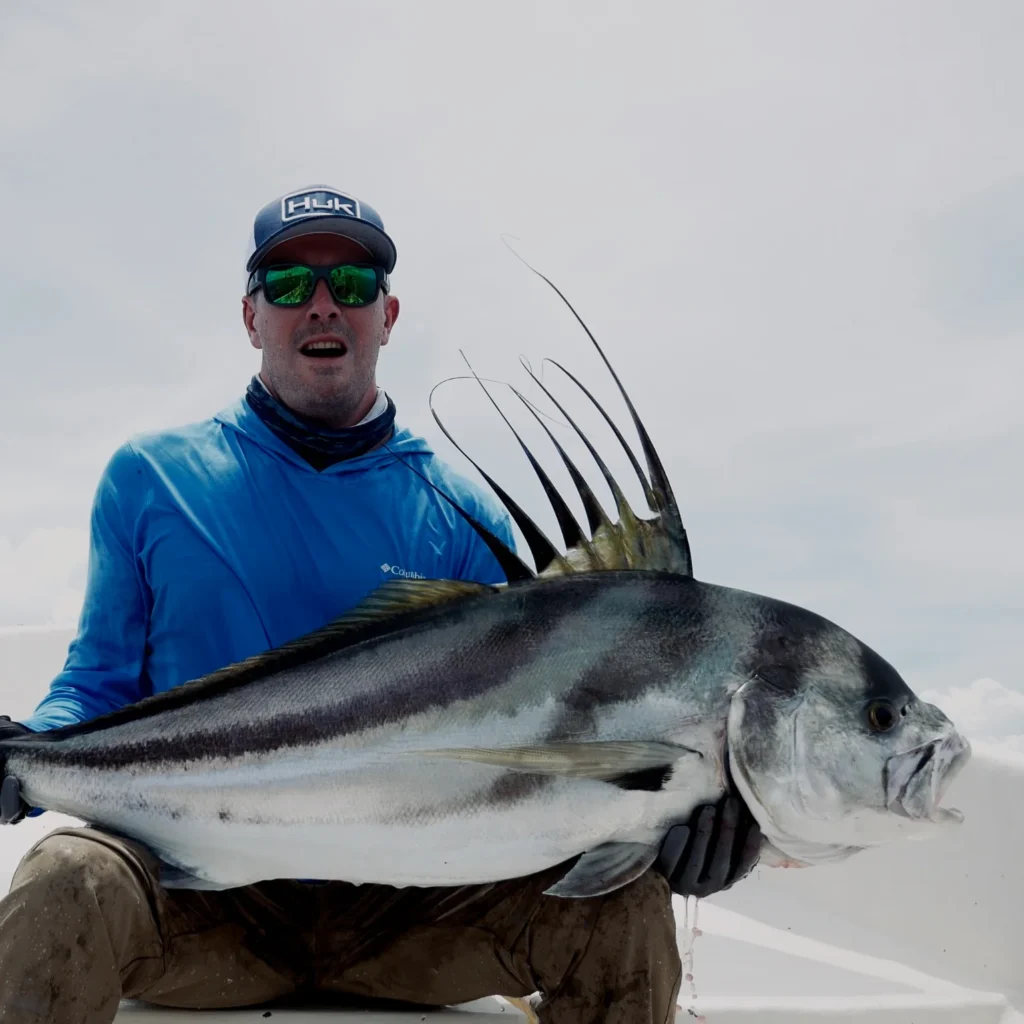
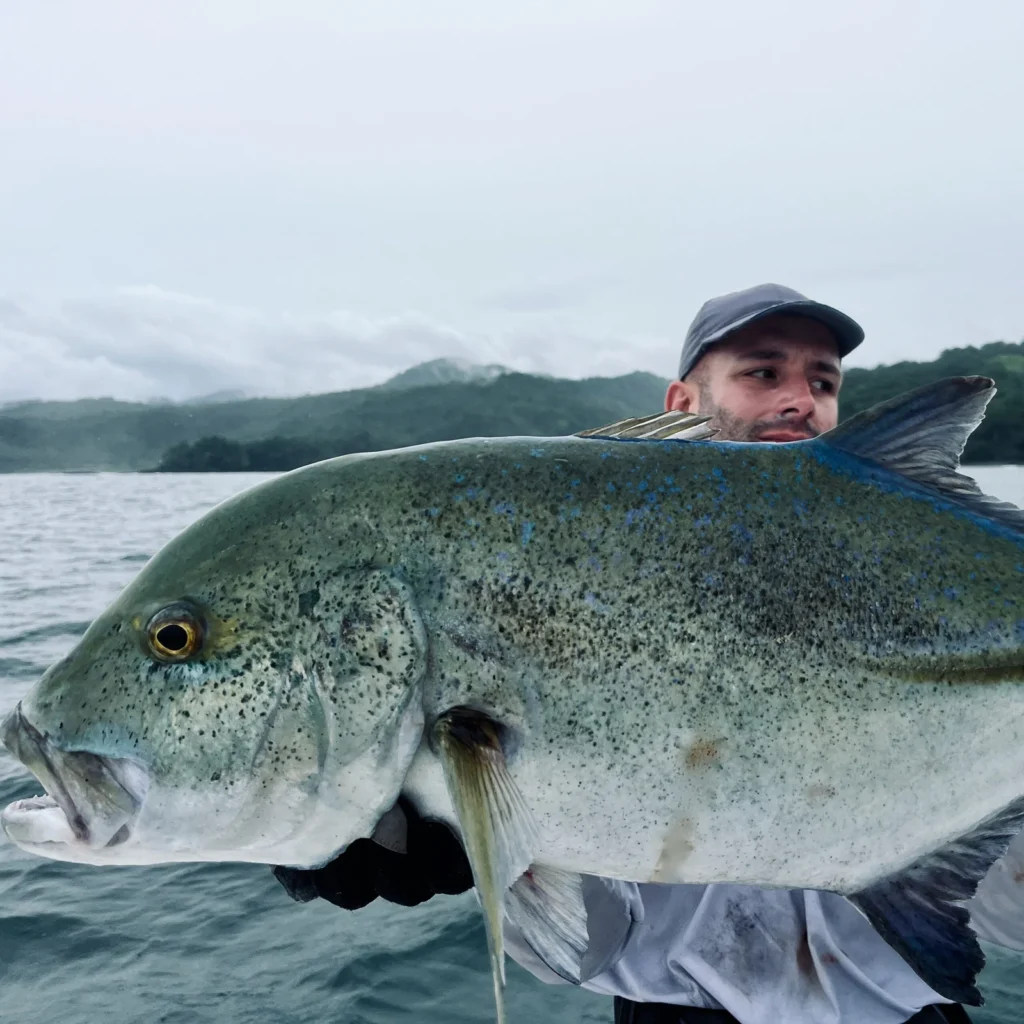
We landed a very strong roosterfish around 20 kg, a serious fish and a perfect example of what rock sessions can deliver when the conditions line up. Roosterfish are never a “casual” catch—they demand clean positioning, the right drift and presentation, and a team that’s ready the moment the bite happens. Along the way, we also connected with additional Panama staples: bluefin trevally, jacks, and the mixed inshore predators that keep every cast interesting. These days weren’t just warm-up days—they were the foundation. Everyone got comfortable with tackle, timing, and the boat’s pace.
From day three: pelagic activity goes wild
From the third day onward, the trip shifted into a completely different gear. The pelagic life showed up in force, the signs became obvious—bait movement, surface activity, cleaner current lines—and the week turned into a proper offshore mission. This is the part of the Panama Fishing Report that everyone dreams about: when you stop “hoping” and start managing the day because the action is so consistent.
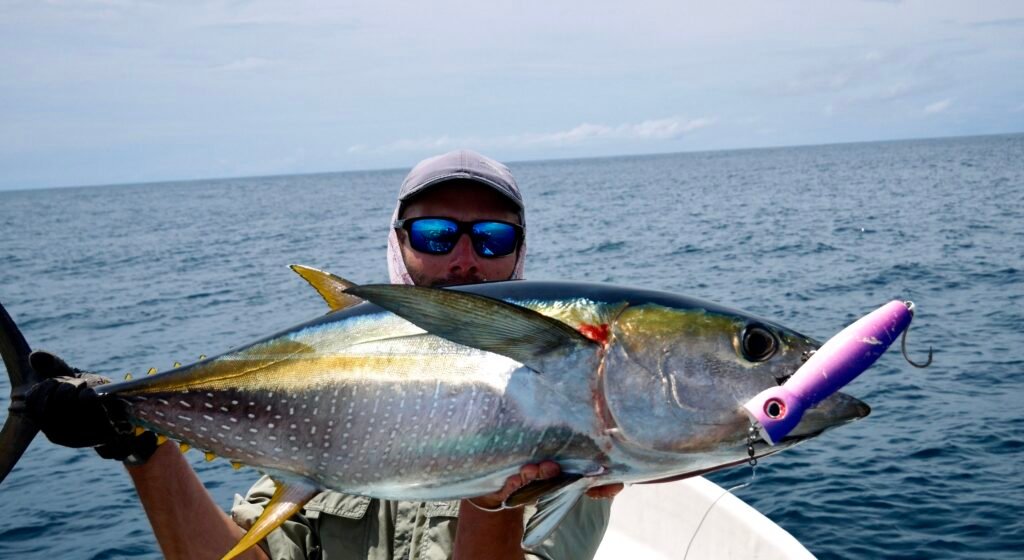
We committed two full days to yellowfin tuna, and the numbers were strong. The average size was solid—good mid-size fish that still demand respect, with enough power to test gear and stamina when the hookups come in waves. Tuna fishing in Panama can be brutally honest: if your knots are weak, if your hooks are dull, or if you lose discipline on the deck, you’ll pay for it quickly. But when everything is dialled, it becomes pure rhythm—cast, work, strike, pressure, land, reset—repeating through the best windows while the ocean stays alive.
These yellowfin sessions were exactly that: consistent, physical, and the kind of fishing where you feel the trip “level up.” The team stayed focused, rotated responsibilities smoothly, and kept the pace efficient. In a week with heavy pelagic activity, organization matters as much as technique.
The wahoo problem: bites, cut-offs, and the final plan
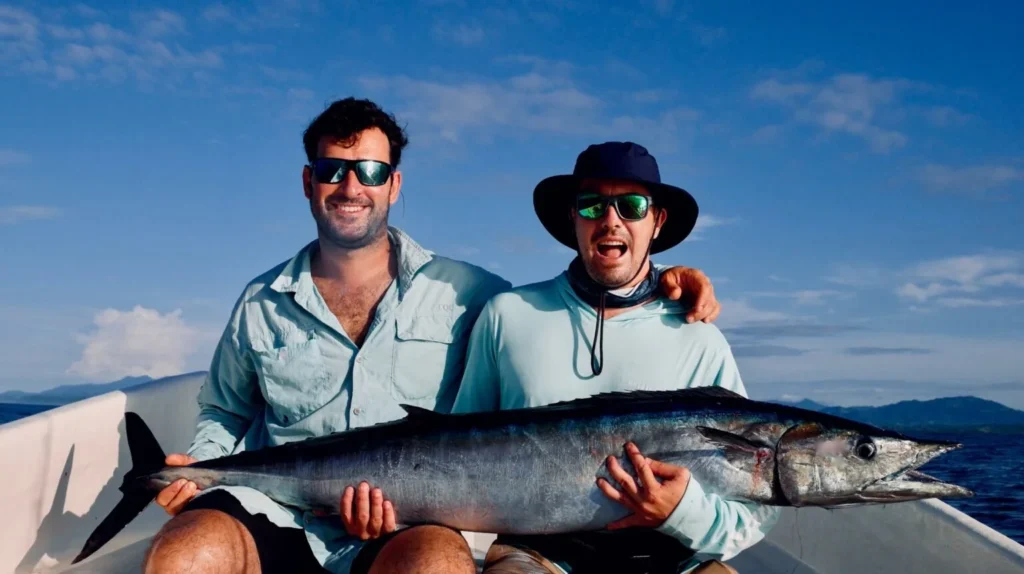
Throughout the week, we also had a recurring theme: wahoo showing up at the worst (and best) moments. Several times, they came up to the surface and hit at popping range, but we couldn’t convert them properly because they cut us off—classic wahoo behaviour. Fast, sharp, and unforgiving. You might see the hit, feel the instant run, and then… nothing. Just a clean cut and a reminder that this species plays by its own rules.
So on the final day, we made a smart decision: instead of insisting on surface hookups with a high cut-off risk, we switched strategy and dedicated the session to trolling specifically for wahoo. This wasn’t about being “less exciting”—it was about being effective and finishing the week with a new win. And it paid off: we got five bites, and we were able to put two wahoo on the deck.
That final push gave the week a perfect ending: a clear example of how adapting tactics can turn frustrating near-misses into real results. It also reinforced the core lesson behind every Panama Fishing Report we publish—Panama rewards anglers who stay flexible. If you force one method because you “want it to work,” you can waste an entire day. If you adjust based on what the ocean is showing you, you keep moving forward.
Final thoughts
June 2024 delivered a complete Panama storyline: strong rock sessions early, a quality roosterfish around 20 kg, a mixed bag of bluefin trevally and jacks, and then a serious pelagic switch with two days of yellowfin action. Closing the week with a targeted wahoo troll—five bites and two landed—was the perfect example of fishing with intention.
If you’re planning a trip, take this report as a blueprint: build the week, watch the signs, commit hard when pelagics turn on, and don’t be afraid to change tactics when a species is beating you at the last step. That’s how a good trip becomes a memorable one—and that’s exactly what this Panama Fishing Report is about.