
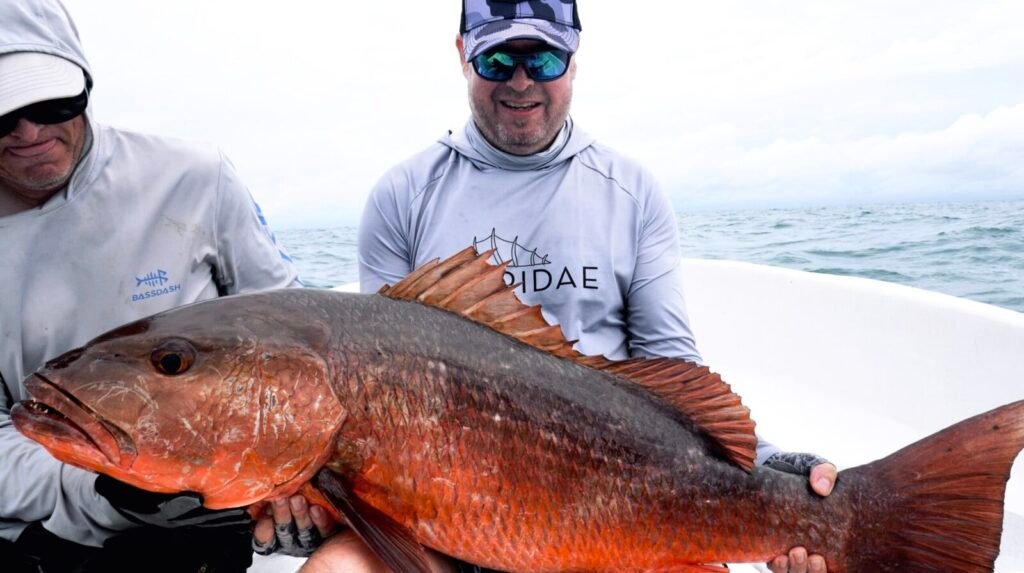
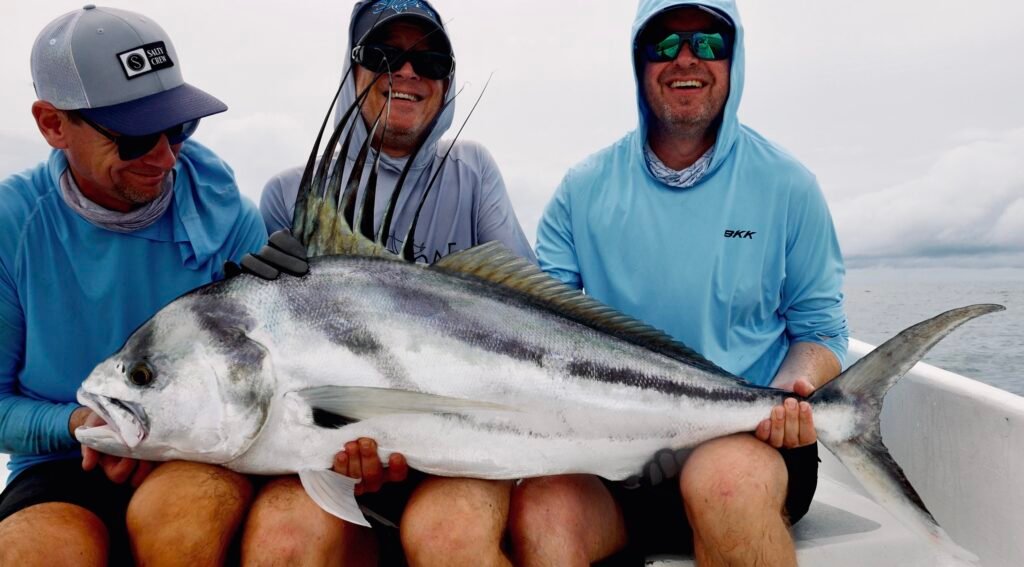
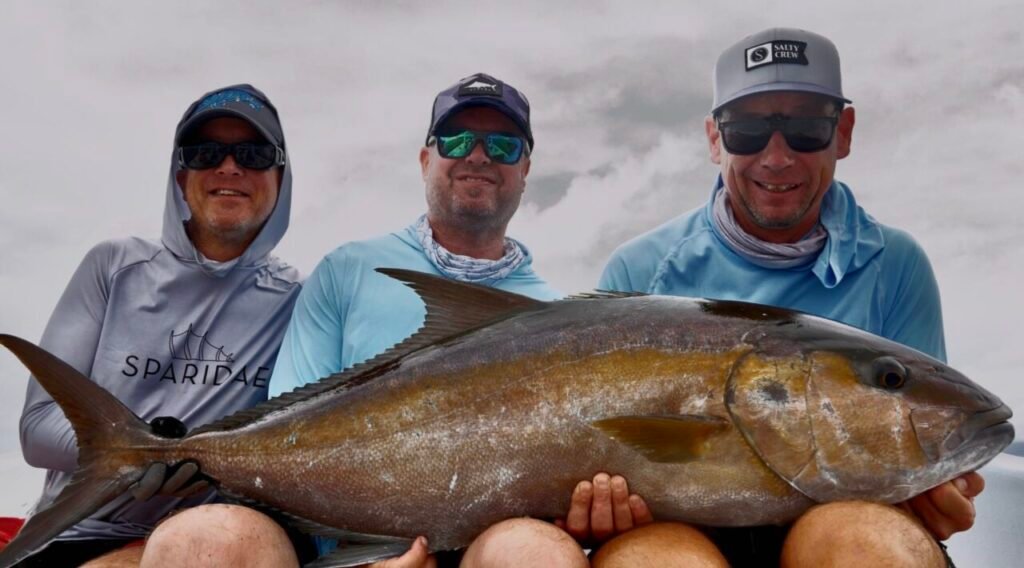
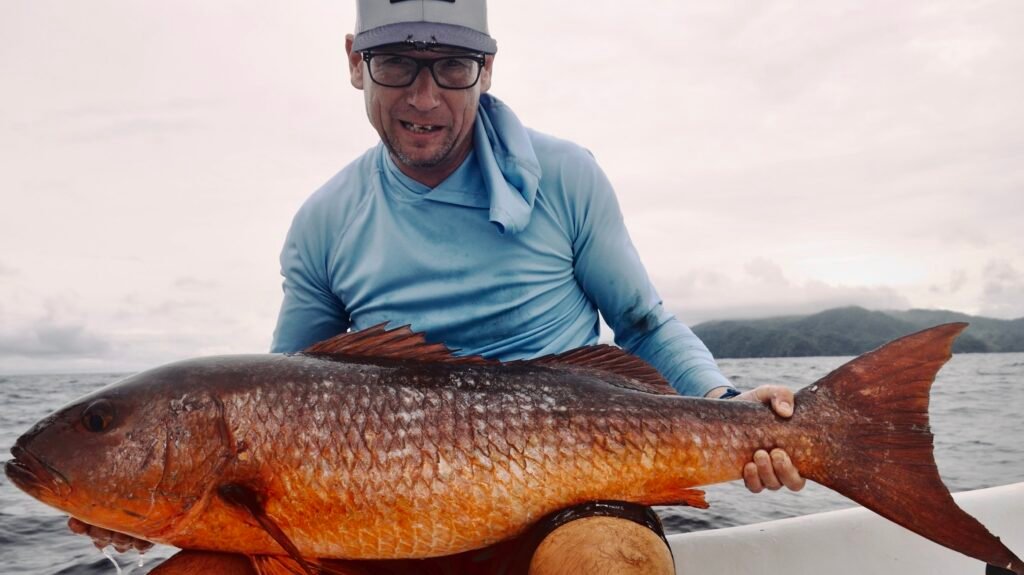
Unforgettable Numbers: 4 XL Roosters, 5 cuberas (105cm), 5 XL amberjacks and 110 cm red Snaper.
Panama is the kind of destination that can humble you one day and then completely blow your mind the next. That’s exactly why this Panamá Fishing Report November matters: it’s not just a highlight reel, it’s a real look at how the week developed, how the fishing changed day by day, and why the right approach turned a “warm-up” start into a full-on frenzy.
Day 1: the warm-up that set the rhythm
The first day was all about settling in, reading the water, and getting everyone dialed. We started with jigging to feel what was happening below us—current strength, bait presence, and how aggressive the fish were in each zone. It wasn’t slow, but it felt like a warm-up: the kind of day where you learn what the ocean is willing to give you and what it’s going to demand in return. By the end of Day 1, the group had confidence in the gear, the jigging cadence, and the boat positioning—exactly what you need before a Panamanian week truly turns on. VIDEO.
From Day 2 onward: pure madness
Once the pattern clicked, it became one of those trips where the bite windows keep opening instead of closing. The activity ramped up fast, and the rest of the week was an authentic rollercoaster of power fish and explosive moments—exactly what people travel to Panama for.
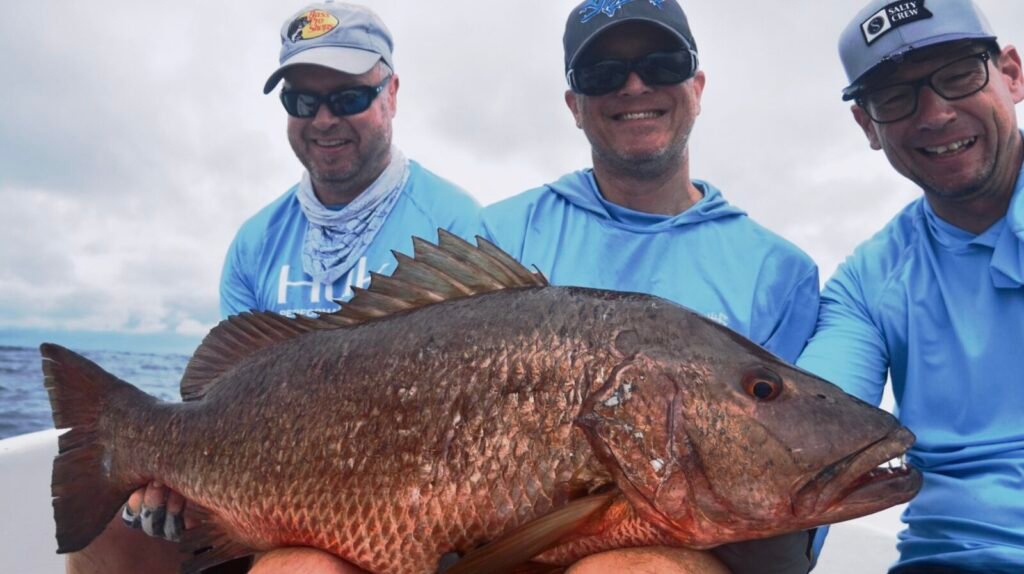
One of the most impressive fish of the week was a cubera snapper measuring 105 cm (like the one in the photo). If you’ve ever fought a serious cubera, you already know: they don’t “fight,” they try to destroy you. It’s brutal, direct, and unforgiving—pure structure power. The cuberas on this trip were caught on bait, which made sense with the conditions and the way the fish were holding. When cuberas are locked near structure and you want a clean, committed bite, bait can be the smartest and most efficient play.
On top of that, the group landed five very good cuberas overall—serious fish, fought hard, and handled with the respect they deserve. And then came another standout: a red snapper over one meter, specifically 1.10 m. Fish like that don’t come easy. They take preparation, correct pressure, clean drag settings, and calm teamwork in the boat.
Roosterfish and amberjacks: mixed tactics, full power
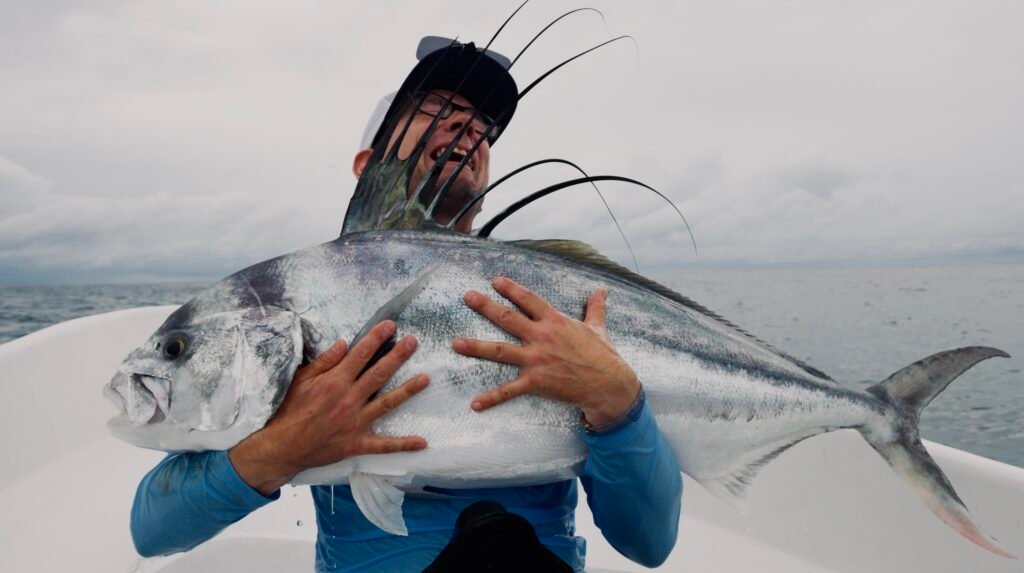
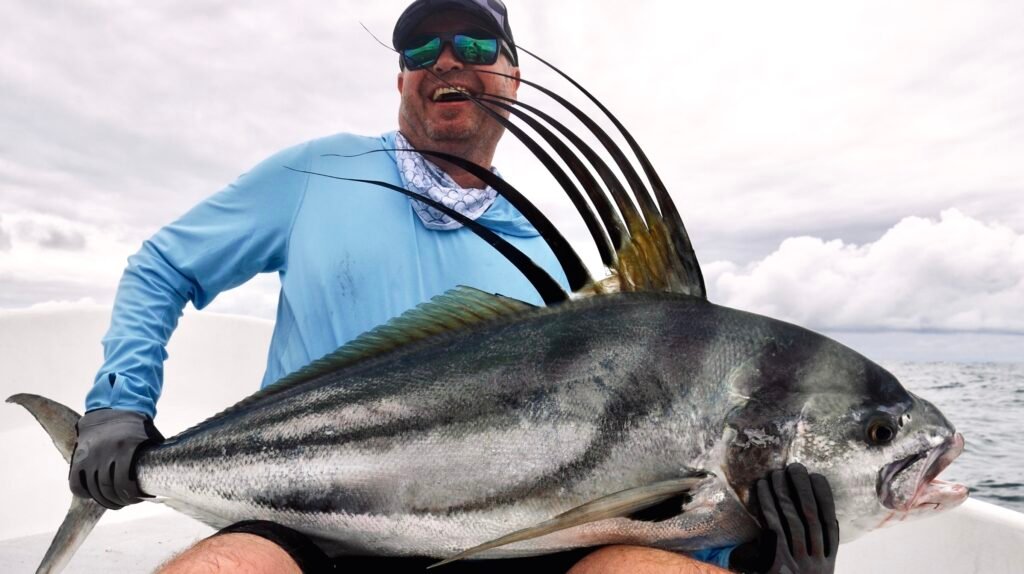
Roosterfish were another highlight of the week. The group managed four very good roosterfish, and what made it interesting is that they came mixed—some sessions worked better with one approach, others demanded something different. That’s the beauty of a proper Panama trip: you adapt. You don’t force one technique just because it’s your favorite. You fish what the conditions are asking for.
Amberjacks were also on fire. The group landed five strong amberjacks, and these were caught jigging—no surprise there. When amberjacks are active, jigging becomes a direct conversation with pure muscle. The hits are aggressive, the runs are heavy, and the fight tests everything: hooks, knots, leaders, and the angler’s ability to keep pressure steady without rushing.
Why the group left happy
This trip wasn’t only about numbers—it was about how the group fished. Cuberas on bait, amberjacks on jig, roosterfish mixed, and tuna on popping: it’s a perfect example of adapting tactics to species and conditions. Everyone got their moments, everyone learned something, and the week delivered the kind of consistent, high-energy fishing that makes Panama so addictive.
If you’re planning your own Panamá Fishing Report November style trip, take this as the main lesson: don’t lock yourself into one method. Read the day, respect the windows, and fish with intention. That’s how a “Day 1 warm-up” becomes a week you’ll talk about for years.